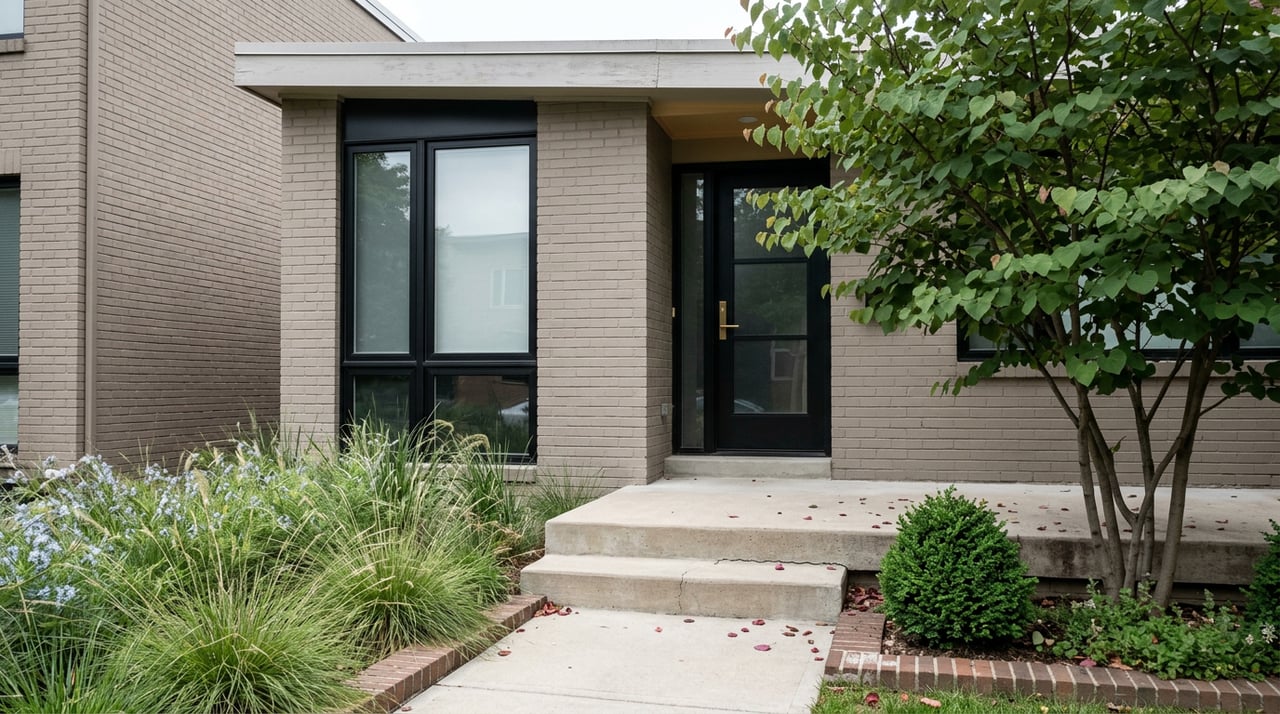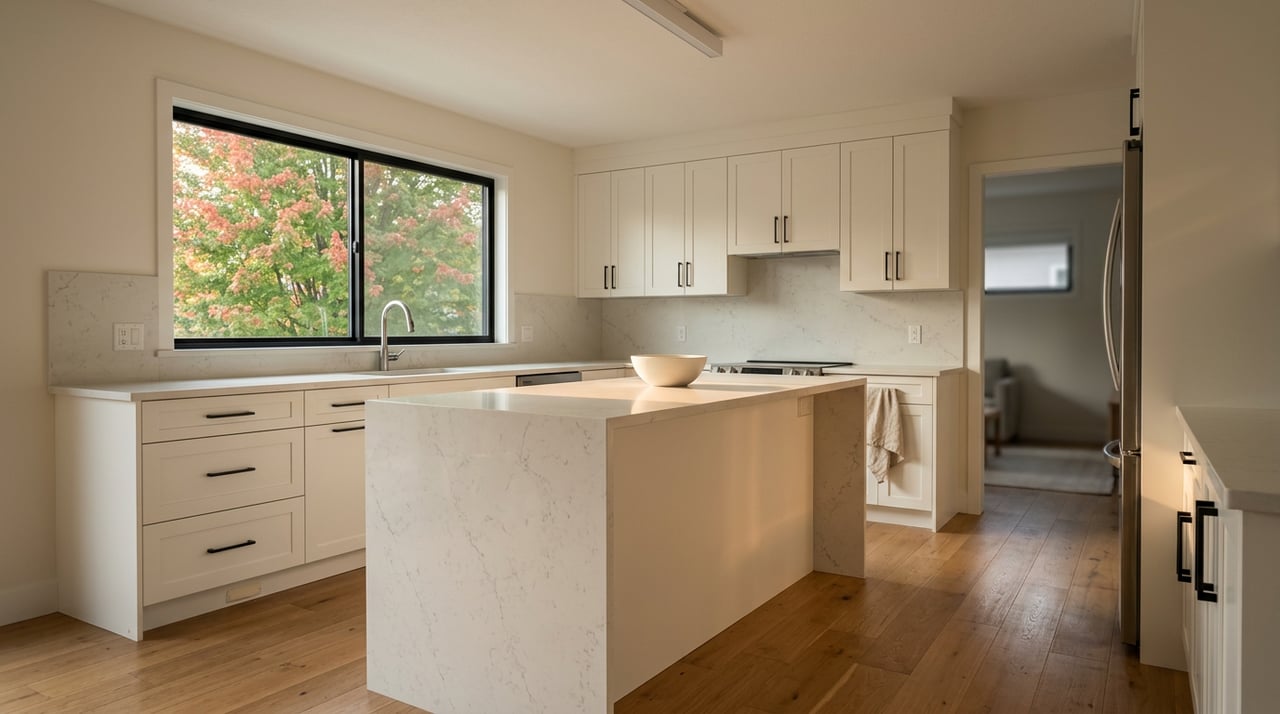
What year was your bungalow actually built?
Most buyers touring Bells Corners, Craig Henry, Centrepointe, Qualicum, or Parkwood Hills can answer that question within a decade. Fewer stop to ask what that decade means for the wiring behind the drywall, and fewer still realize the real risk isn't the inspection itself. It's what happens in the short window right after it, when a home that looked move-in ready suddenly needs an insurance company's sign-off before your lender will fund.
Nepean's older bungalow streets share a build era almost like a fingerprint. Nearly all of the neighborhood's classic single-level housing, from Bells Corners' compact ranchers to the larger updated homes in Centrepointe and Qualicum, went up between the 1960s and the 1980s. That's not a coincidence buyers should treat as background trivia. Inside that broader span sits the roughly decade-long stretch when copper prices spiked and builders across the Ottawa area, including Kanata, Barrhaven, and Gloucester alongside Nepean, switched to aluminum branch wiring to keep costs down. If you're comparing three bungalows in Parkwood Hills or The Glens this fall, there's a real chance you're comparing three homes with the same wiring question mark, not one unlucky listing.
Why This Keeps Turning Up on the Same Streets
Aluminum wiring was common in Canadian homes built between 1965 and 1976. The Electrical Safety Authority, the provincial body that regulates this, has been fielding a steady stream of questions from owners and buyers in exactly this kind of housing stock, because insurers increasingly won't provide or renew coverage on these homes without proof the wiring has been inspected and, where necessary, repaired.
That's worth sitting with for a second. The wiring itself isn't automatically the problem. The Ontario Electrical Safety Code permits aluminum wiring, and ESA guidance is clear that it's safe when the connections are made properly with devices rated for aluminum use. The failures show up at termination points, where the metal expands and contracts differently than copper, loosens at outlets and switches over decades, and eventually overheats. Age tells you the wiring is possible. It doesn't tell you its actual condition, and that distinction is exactly what gets lost in casual conversation at open houses.
The Wiring Isn't the Deadline. The Insurance Binder Is.
Here's the part that catches people off guard mid-transaction. A financed purchase in Ontario generally requires proof of home insurance in place before closing. If an inspector flags aluminum wiring and your insurer wants an ESA Certificate of Acceptance before they'll bind a policy, you're now running two clocks at once: your standard inspection condition, which typically gives you a handful of business days, and a separate process involving a licensed electrical contractor's assessment, the actual repair work, and an ESA inspection to issue that certificate.
That second clock rarely fits inside the first one. A licensed contractor doing copper pigtailing, the standard fix where every connection point gets an approved connector, can usually complete the physical work in a day or two for a typical three-bedroom home. But scheduling an assessment, completing the repair, and getting ESA to inspect and certify it is not a same-week turnaround in most cases, and that's before anyone has called the insurance broker to confirm the paperwork satisfies their underwriting.
This is the actual friction. Not "does this house have aluminum wiring," but "can I get this documented and certified before my financing conditions expire."
What Remediation Actually Costs
Pricing guides published by Ottawa electricians this year put copper pigtailing at roughly $50 to $100 per connection point, and a typical three-bedroom home has somewhere between 40 and 60 of them. That works out to a total project in the $2,500 to $5,000 range including the ESA permit and inspection, and it's described as costing 60 to 75 percent less than a full rewire.
| Remediation path | What it involves | Typical scope |
|---|---|---|
| Copper pigtailing | Approved connectors installed at every connection point; ESA inspects and certifies | 1 to 2 days of labor for a typical 3-bed home |
| Panel upgrade (often paired) | 100-amp to 200-amp service, common in homes from this era | Bundled with pigtailing to avoid a second service call |
| Full rewire | Complete replacement of branch wiring | Reserved for cases with deteriorated insulation or a major renovation already opening the walls |
A lot of Nepean bungalows from this era also carry 100-amp panels, and electricians frequently recommend upgrading to 200-amp while the walls are already open for pigtailing, since it's one service call instead of two and adds capacity for things like EV charging down the line.
For Sellers: The Red Flag You Can Turn Into a Green Light
If you're preparing to list a Nepean bungalow from this build era, the ESA certificate is worth having in hand before the first showing rather than after the first offer. Unremediated aluminum wiring is a well-known red flag in Ottawa inspections, and it's been shown to shave $5,000 to $15,000 or more off an offer, or push a buyer to walk entirely, simply because they don't know what they're inheriting and don't have time to find out during a short condition period.
Sellers who complete pigtailing and hold the ESA Certificate of Acceptance before listing remove that uncertainty for every buyer who tours the house. It stops being a negotiating point and becomes a line in the listing description. That's a small, fixable cost compared to the alternative of a deal stalling in week two over a wiring question nobody budgeted time to resolve.
For Buyers: What to Build Into the Offer Instead of Walking
If aluminum wiring turns up during your inspection, the move isn't to abandon the house. It's to slow down long enough to get real answers. Call your insurance broker first and ask what they specifically require to bind a policy on that address. Some insurers will cover the home as is with a premium adjustment. Others want the ESA certificate before they'll quote at all. That answer should shape your next step, whether that's negotiating a price adjustment to cover remediation, asking the seller to complete the work before closing, or extending your condition period to allow time for an electrician's assessment.
What buyers should avoid is opening panels or pulling outlets to check for themselves during a showing. Leave that to a licensed contractor, and don't assume a renovated interior tells you anything about what's behind the walls. Replacement outlets rated for copper only, installed over old aluminum connections, are exactly the kind of thing an inspector is trained to catch and a homeowner might not know to look for.
A Few Questions Worth Asking Before You Waive Conditions
Does every Nepean bungalow from this era have aluminum wiring? Not necessarily. Build year narrows the odds, but only a licensed electrician opening the panel and outlets can confirm what's actually installed. Some homes have aluminum branch circuits with a copper main feed, and some have already been remediated by a previous owner.
If my inspector finds aluminum wiring, does the deal fall apart? It doesn't have to. Most cases resolve through pigtailing rather than a full rewire, and many insurers will still cover the home once that work is documented. The risk is timing, not outcome, so building enough runway into your conditions matters more than panicking at the inspection report.
Can a Nepean bungalow with aluminum wiring even be insured? Generally yes. Insurers commonly ask for an ESA Certificate of Acceptance first, and some charge a modest premium adjustment rather than declining coverage outright. The specifics vary by insurer, which is exactly why that call should happen the same day the wiring is flagged, not the week before closing.
Where This Leaves You
The wiring question isn't unique to one unlucky listing in Nepean. It's a structural feature of buying or selling in a neighborhood where so much of the housing stock shares the same construction decade. Treating it as a documentation and timeline issue, rather than a reason to panic or a reason to ignore an inspector's note, is what separates a smooth closing from a scramble in the final week.
If you're weighing a Nepean bungalow, whether you're the one listing it or the one writing the offer, The Papineau Group can walk through what a specific address's build year and wiring history actually mean for your timeline before you're up against a financing deadline. Book a Discovery Call and let's map out the plan before the clock starts.