A standard home inspection in Ontario ends at the foundation wall. The inspector checks the furnace, the roof, the electrical panel, maybe runs water in a few sinks. What almost never gets checked, unless a buyer specifically asks and pays extra for it, is the pipe running from that foundation out to the street. In most Ottawa neighbourhoods that gap in coverage is a minor footnote. In Alta Vista, where the original housing stock is now closing in on seventy years old and the City itself is currently digging up a nearby street to replace the same kind of infrastructure, it is the single highest-probability expensive surprise a buyer or seller can walk into.
That is the claim this post is built around: in Alta Vista specifically, the sewer lateral deserves the same weight in a purchase agreement as the roof or the furnace, not because every lateral is failing, but because the neighbourhood's age, its lot design, and a live City construction project all point at the same underground system at the same time.
What the inspection actually covers, and what it doesn't
A home inspector's report tells you about the house. It does not tell you about the private pipe that carries wastewater from that house to the City's main line under the street, a run that in Alta Vista often crosses 50 to 100 feet of mature lawn and root system before it ever reaches City property. That pipe is called the sewer lateral, and it belongs to the homeowner, not the City, for its full length up to the property line and often beyond.
Buyers routinely assume "the plumbing was inspected" means the whole system, including what's buried outside. It doesn't. A camera scope of the lateral is a separate service, usually arranged directly with a plumbing contractor, and it is the only way to see whether the pipe is cracked, offset, or already carrying root intrusion. Skipping it doesn't mean the risk goes away. It means the risk moves from something you negotiated on paper to something you discover with a flooded basement.
The City is replacing the same kind of pipe right now
This isn't a hypothetical risk. The City of Ottawa is currently rebuilding Summit Avenue between Alta Vista Drive and Fairbanks Avenue, and the project scope is explicit: replace the sanitary sewer, replace the watermain, rebuild the road, add a sidewalk. Taggart Construction Ltd. holds the contract, approved project funds run to $7,615,000, and most of the underground and road work is expected to wrap up this fall, with final paving and landscaping following in spring 2027.
The City doesn't spend $7.6 million rebuilding a residential street's underground infrastructure on a whim. It does it because the pipe has reached the point where patching no longer makes sense. Summit Avenue sits inside the same post-war Alta Vista footprint as the streets around it, built to the same standards, on the same timeline. If the City's own main line needed full replacement rather than repair, it is a reasonable signal about what condition the private laterals feeding into that system are likely in as well, whether or not the homes attached to them have had any visible plumbing symptoms yet.
Why the age and the trees compound each other here
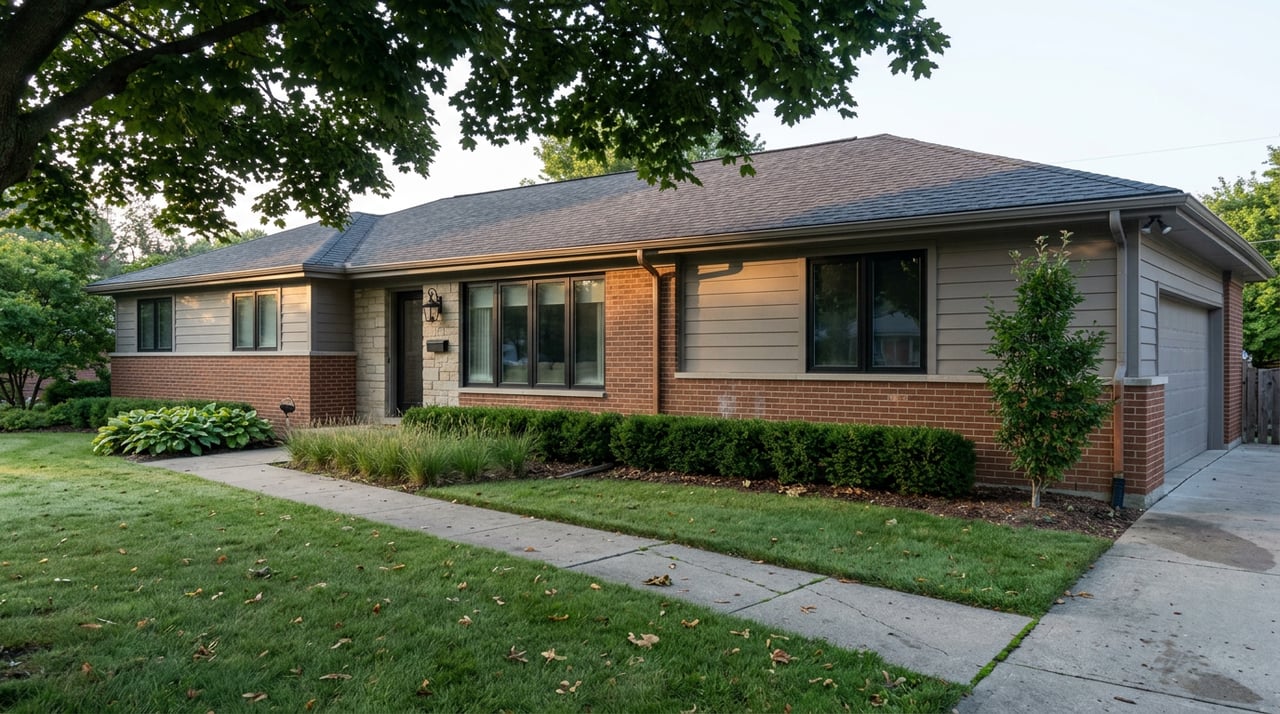
The City's own planning documents describe Alta Vista, Faircrest Heights, and Riverview Park as Ottawa's first post-World War II suburb, noting that by 2046 the area's building stock will be close to eight or nine decades old. Most of the original housing here went up as bungalows, split-levels, and two-storey homes on generous 50 to 100 foot lots with deep setbacks, the kind of lot size that gave room for the mature tree canopy the neighbourhood is known for today.
Those same mature trees are the other half of the problem. Older sewer laterals in this era were typically clay or cast iron, materials that develop hairline cracks and loosened joints as they age. Tree roots don't create those cracks, but they exploit them relentlessly, growing toward the moisture and nutrients inside a compromised pipe until they choke off flow entirely. A young tree planted in 1962 on an Alta Vista lot is now a mature tree with a root system that has had six decades to find every weak point in the pipe running underneath it. This is not a defect specific to poorly maintained homes. It's closer to a predictable outcome of pairing 1960s pipe materials with 2020s tree maturity, on exactly the kind of large, tree-shaded lot that makes Alta Vista desirable in the first place.
A rebate almost nobody in Alta Vista is using
Here's the part of this story that works in a homeowner's favour. The City's Residential Protective Plumbing Program offers rebates toward backwater valves and sump pumps, and the eligibility cutoffs line up almost perfectly with Alta Vista's original construction dates.
| Device | Age cutoff | Rebate |
|---|---|---|
| Exterior storm backwater valve | Built before Jan. 1, 2004 | Up to $2,500 |
| Sump pump, new pit | Built before Jan. 1, 2004 | Up to $3,000 |
| Sump pump, existing pit | Built before Jan. 1, 2004 | Up to $1,500 |
| Interior sanitary backwater valve | Built before Jan. 1, 2012 | Up to $1,000 |
Since the majority of original Alta Vista homes date to the 1950s through the 1980s, nearly every one of them clears both cutoffs with decades to spare. The program also requires a closed-circuit television inspection of the lateral as part of the approval process, meaning a homeowner who applies gets the exact camera scope a buyer would want before closing, at least partially subsidized. The application has real deadlines. Work must be complete and the rebate application submitted within 12 months of the building permit date, and a licensed plumber has to do the installation. It is not available for replacing a device you already have. But for a seller sitting on an original 1960s lateral who has never had it scoped, this program turns a defensive inspection into a documented, partially funded upgrade.
What this means if you're the one selling or buying
If you're preparing to list an original Alta Vista home, get ahead of this rather than let a buyer's inspector find it first. A camera scope costs a fraction of what a mid-transaction discovery does, and a clean report becomes something you can point to, not just claim.
- Ask a licensed plumber for a lateral camera scope before you list, especially if the home has never had one and mature trees sit within 20 feet of the likely pipe route.
- If the scope shows early root intrusion, get a repair estimate before pricing the home. A documented, already-quoted fix is easier for a buyer to accept than an open question.
- Check whether your home's construction date and current fixtures make it eligible for the RPPP rebate before assuming any upgrade comes entirely out of pocket.
If you're buying an original Alta Vista bungalow or split-level, build the lateral scope into your conditions the same way you'd build in financing or a general inspection.
- Make your offer conditional on a satisfactory sewer lateral inspection, not just a general home inspection, particularly on lots with large mature trees.
- Ask directly whether the seller has ever had the lateral scoped, and ask to see the report if one exists.
- Budget for the possibility of a repair. A cracked or root-filled lateral is a known, common outcome on lots like these, not a rare defect, and knowing the range before you're in a time-pressured negotiation gives you leverage instead of panic.
A few questions worth asking before you sign anything
If the lateral fails, is that my problem or the City's? The City is responsible for the main sewer line under the street. The lateral connecting your home to that main, for its entire length including the portion under the boulevard, is generally the homeowner's responsibility to maintain and repair. The City's own guidance on basement flooding lays this division out directly.
Does home insurance cover a lateral failure? Coverage varies by insurer and by policy, and sewer backup endorsements are often a separate add-on rather than standard coverage. This is a conversation for your insurance provider, not something to assume either way.
Can a seller apply for the RPPP rebate if they're about to move? The program is tied to the property and its eligible devices, not to how long the current owner plans to stay. A seller who completes the work and rebate application within the required window before closing can still benefit, and a documented backwater valve or sump pump becomes a selling point rather than a cost buried in the listing price.
Alta Vista's lot sizes, mature trees, and quiet post-war streets are exactly why people want to live there. Understanding what's aging underneath those same features is how you protect the value of buying or selling into that neighbourhood rather than being surprised by it.
If you're weighing a purchase or a listing in Alta Vista and want a straight read on what a specific property's age and lot might mean for this kind of inspection, The Papineau Group is a good place to start that conversation. Book a Discovery Call and we'll walk through what to ask before you write or accept an offer.